
Written in full
The Occupancy Course
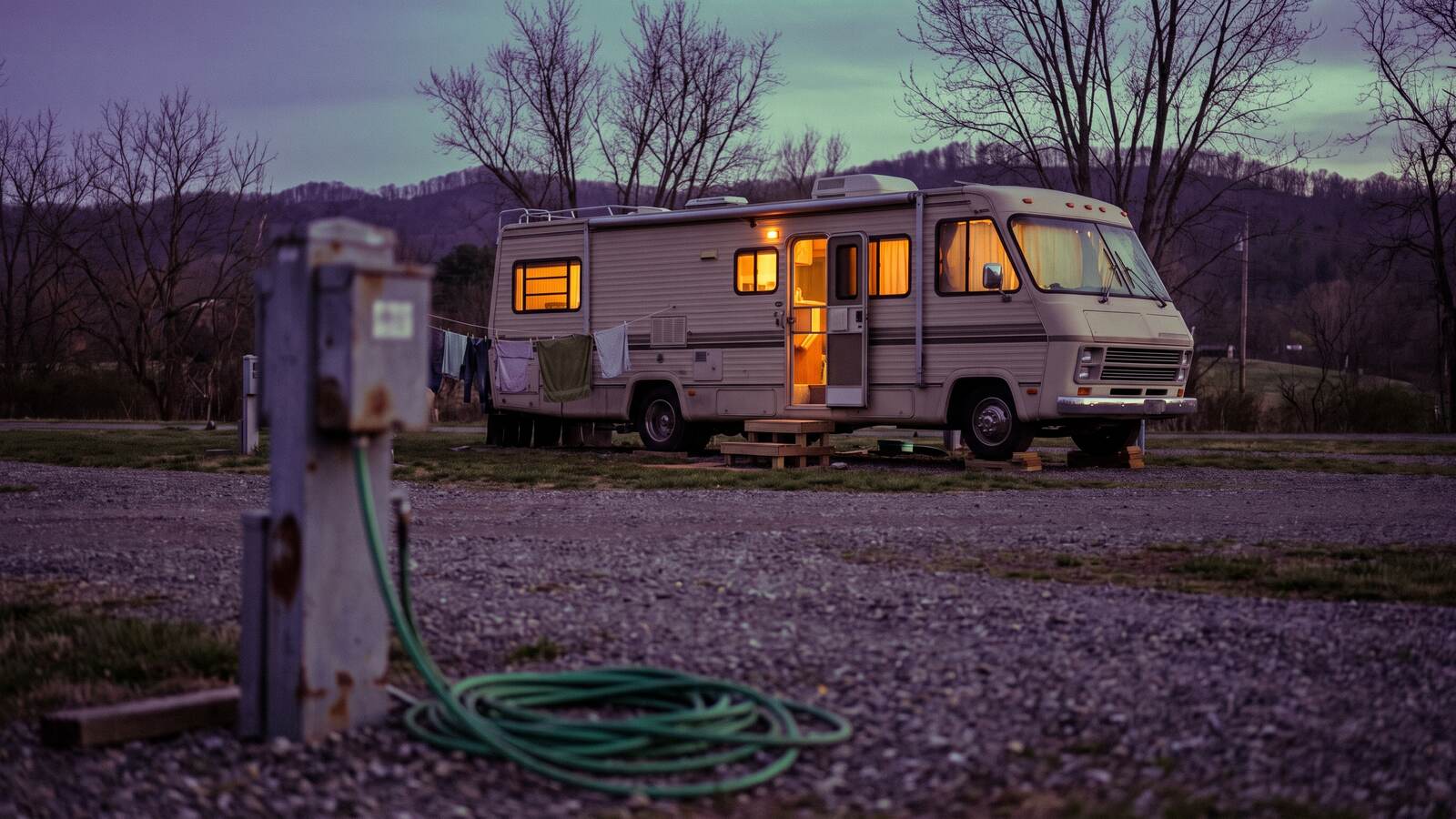
Turn empty park pads into monthly rent from local tenants, using refurbished salvage motorhomes bought, moved and finished under a $7,500 all-in cap.
Seats open · Cohort-free, start any day
Complete written courses on the practical, non-obvious skills that move real money: turning a dead RV pad into rent, finding every recurring bill you forgot you pay, keeping the machines you already own alive, and buying something used without being taken. Every module ends with a worksheet you fill in with your own numbers.
The premise
Everything taught here is already known by somebody. It is known by the park owner who worked it out over four bad winters, by the technician who stopped buying parts and started measuring, by the buyer who has walked away from thirty cars. None of them wrote it down, so everybody after them pays the tuition again in wasted money.
A course here is that knowledge written out end to end, in order, with the arithmetic shown and every outside number cited to the page it came from. There is no video to sit through and no cohort to wait for. You read a module, you download its worksheet, and you fill the worksheet in with your own figures — which is the point, because a worksheet with your own numbers in it is the only thing that changes what you actually do on Monday.
Every course also says plainly where it stops. Where the answer is state-specific, it tells you which agency to ask. Where the work crosses into a licensed trade, it names the trade and stops. A course that will not tell you what it does not know is not teaching, it is selling.
Where you are
| Module check | Score | Result |
|---|---|---|
| 1 · The Local-Tenant Thesis | 100% | Passed |
| 2 · Unit Economics | 90% | Passed |
| 3 · Sourcing Salvage Units | 80% | Passed |
| 4 · Transport and Placement | 100% | Passed |
| 5 · The 30-Day Refurb | 60% | Retake |
| 6 · Permits, Zoning, Insurance | 90% | Passed |
How a course runs

Read the lesson, follow the worked example, and see where each outside number came from.
Take the worksheet into your own situation. Measure, compare and make the decision concrete.
Answer the module check. Revisit anything you missed, then carry the skill into the next task.
The catalogue
All four are written out in full — 131 lessons and 32 worksheets, every outside number cited inline to the page it came from, and every point at which you should stop and call a professional named along with which professional it is. The whole curriculum is public before you buy, down to every lesson title, and the first lesson of each course opens without an account.
The flagship
The Occupancy Course · Module 2, Unit Economics
What you actually get
Not a summary of the lesson. A working table with a worked example row, the formula for every computed column, and blank rows for your own figures. Download it as CSV, open it in anything, and the module is finished when the sheet has your numbers in it.
The one shown is the bid sheet from Module 2 of The Occupancy Course: per-unit roi sheet. Thirty-two more like it across the catalogue, one per module.
The Occupancy Course · Module 2
| Line | Example | Your number | How to compute |
|---|---|---|---|
| Salvage purchase incl. auction fees | Your quote goes here | — | Your winning bid plus buyer fees and any broker fee. Module 3. |
| Transport to park | Your quote goes here | — | Quote from your hauler for the actual distance. Module 4. |
| Refurb, standard scope | Your quote goes here | — | Materials plus paid labor plus inspections. Module 5. |
| All-in unit cost (cap) | $7,500 | — | Sum of the three lines above. Must be at or under $7,500. |
| Monthly rent, pad plus unit | $650 | — | Your market. Rural pad rent $350 to $700, metro $1,200 and up per https://latestcost.com/average-cost-of-long-term-rv-parks/; unit rents above bare pad. |
| Vacancy allowance | 1 month/yr | — | Use one month a year until your own turnover data replaces it. |
The certificate
This certifies that
has completed every lesson and passed the written assessment for every module of this course.
The certificate names the school and nobody else. It carries an identifier, and the identifier resolves to a public page giving the holder, the course and the date — three fields, and nothing the holder did not agree to publish.
It does not claim approval by any regulator, because this school holds none. A buyer running their own school on this platform who does hold an accreditation puts that line in their config and it prints; left empty, nothing prints. That is the whole mechanism, and it is deliberately impossible to fake by accident.
Who wrote it
Rob builds the operating systems small operators use to run their businesses — parks, contractors, brokers, shops. The courses here are written from the same place: the arithmetic he had to do himself before he could tell anybody else to do it.
The opening lesson of every course is free and needs no account. If the writing is not worth your time you will know in four minutes, which is the point.


